
Last updated: 25 July 2026 · ~5 min read · By the Imbas editorial team
TL;DR: Fragrance-free vs unscented is the distinction that matters most: one means no fragrance added, the other can hide a masking scent. Three reassuring words sit on the front of skincare bottles, and they don’t carry equal weight. “Fragrance-free” means no fragrance was added — the term dermatologists steer eczema-prone skin toward [AAD]. “Unscented” is the sneaky one: it means the product doesn’t smell of much, which a brand can achieve by adding a masking fragrance [US FDA] — so it can still contain the very thing you’re avoiding. “Hypoallergenic” has no legal definition at all [US FDA]. Two of the three do real work; one is decoration. When in doubt, the ingredient list settles it — scan for Parfum or Fragrance.
Walk the skincare aisle with eczema and three words do a lot of the reassuring: “fragrance-free,” “unscented,” and “hypoallergenic.” They all sound like promises. Two are genuinely useful. One means almost nothing. Here’s how to tell them apart, calmly, because most products are fine either way.
Fragrance-free vs unscented: what does “fragrance-free” mean?
Quick Answer: A product labelled fragrance-free should contain no ingredients added purely to give it a scent. That’s the wording dermatologists steer eczema-prone and sensitive skin toward [AAD].
One honest caveat, straight from the regulator: “fragrance-free” doesn’t guarantee odourless. A product can still have a faint smell from its other ingredients; it simply hasn’t had fragrance added on top [US FDA]. That’s fine — a mild natural smell from, say, a plant oil isn’t the same as an added fragrance blend, and it’s the added blend that reactive skin reacts to.
Key takeaway: Fragrance-free is the phrase worth trusting — confirm it on the back by checking there’s no Parfum.
Isn’t “unscented” the same as “fragrance-free”?
Quick Answer: No — this is where the two quietly diverge. “Unscented” means the product doesn’t smell of much, but it can get there by adding a masking fragrance to cover the natural smell of its other ingredients [US FDA]. So an “unscented” product can contain the exact thing an eczema-prone user is trying to avoid.
It’s not a scandal; it’s just why the two claims aren’t interchangeable. Fragrance is the single most common thing sensitive skin reacts to, so the distinction does real work. When a front-of-pack word and the ingredient list seem to disagree, the ingredient list wins: scan for Parfum or Fragrance.
Key takeaway: “Unscented” is about smell, not ingredients. Don’t read it as fragrance-free.
Is “hypoallergenic” a meaningful claim?
Quick Answer: Barely. This is the word to essentially ignore. There is no legal or standardised definition of “hypoallergenic.” The US FDA — the most-referenced authority on this — states plainly that there are no Federal standards or definitions governing the term [US FDA].
That means a brand can print “hypoallergenic” based on its own reasoning, or none at all. It isn’t a lie, exactly — it’s just a claim with nothing behind it, which makes it useless as a deciding factor. Treat it as marketing, and let the ingredient list do the actual work.
What each front-of-pack word promises, and how much to trust it. Definitions per US FDA cosmetic-labeling guidance and American Academy of Dermatology. Retrieved July 2026.
| Label word | What it actually means | Trust level |
|---|---|---|
| Fragrance-free | No fragrance added (may still have a faint natural smell) | High — the one to look for [AAD; US FDA] |
| Unscented | Doesn’t smell of much; may contain a masking fragrance | Low — not the same as fragrance-free [US FDA] |
| Hypoallergenic | Nothing standard — no legal definition | Ignore it [US FDA] |
Key takeaway: One of these three words is doing the heavy lifting. It’s “fragrance-free.”
Frequently asked questions
What’s the difference between fragrance-free and unscented? Fragrance-free means no fragrance was added. Unscented means the product doesn’t smell of much — but a brand can achieve that by adding a masking fragrance to cover a raw smell [US FDA]. So an unscented product can still contain fragrance, the most common irritant for sensitive skin. For eczema-prone skin, choose fragrance-free and confirm no Parfum on the label.
Does “hypoallergenic” mean a product is safe for eczema? No. “Hypoallergenic” has no legal or standardised definition — the US FDA confirms there are no Federal standards governing the term [US FDA]. A brand can use it without any defined testing. It’s not a reliable signal for eczema-prone skin. Judge the product on its ingredient list, not the word.
Does fragrance-free mean the product has no smell at all? Not necessarily. Fragrance-free means no fragrance was added, but a product can still have a faint natural smell from its other ingredients [US FDA]. That’s normal and not a concern — it’s the added fragrance blend, not a mild base smell, that reactive skin typically reacts to.
If a product says “unscented,” should I avoid it? Not automatically — just don’t treat “unscented” as proof it’s fragrance-free. Check the ingredient list: if there’s no Parfum or Fragrance, it’s fine; if there is a masking fragrance, and your skin is reactive, that’s worth knowing. The word tells you about smell; the back of the pack tells you about ingredients.
Which label word should I actually look for with eczema? Fragrance-free. It’s the term dermatologists recommend for eczema-prone and sensitive skin [AAD], and the one with a real meaning behind it. Then confirm it against the INCI list. Ignore “hypoallergenic,” and read “unscented” as a smell claim rather than an ingredient guarantee.
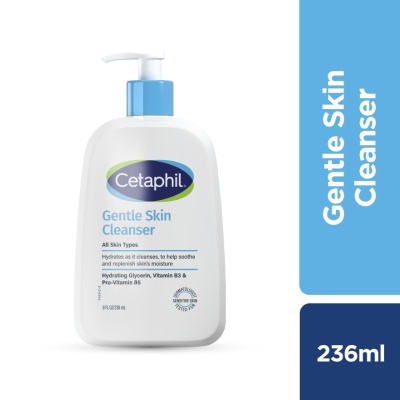
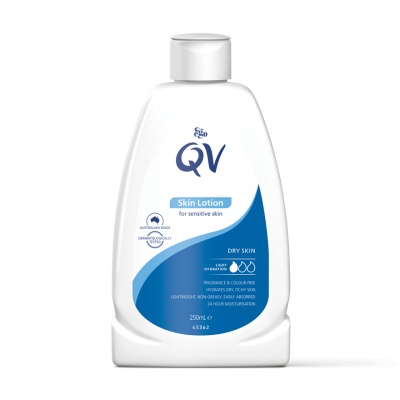
Genuinely fragrance-free picks (not just “unscented”)
Skip the guesswork on the front of the bottle — these are fragrance-free options that read clean for eczema-prone skin.
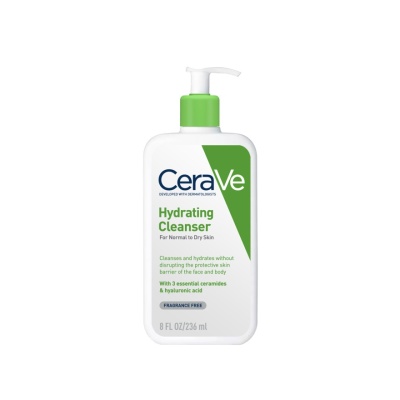
Some links are affiliate links — if you buy through them we may earn a small commission, at no extra cost to you. It’s what lets us do this research and take no money from brands to change a result.
Prices and availability change, and formulas differ by market. General information, not medical advice — for persistent or severe symptoms, see a doctor or dermatologist. Imbas is launching soon — join the waitlist →
General information, not medical advice — if your eczema is severe or persistent, see a doctor or dermatologist.