
Last updated: 25 July 2026 · ~6 min read · By the Imbas editorial team
TL;DR: A gentle cleanser for eczema is judged on the back label, not the front. For eczema-prone skin, most of a cleanser’s ingredient list is fine. Only a short list is worth checking: added fragrance (listed as Parfum), the preservative methylisothiazolinone (MI), and fragrance components like Linalool and Limonene that turn troublesome once a bottle is old. A cleanser that reads well is fragrance-free (not merely “unscented”) with a simple surfactant base. Because a cleanser rinses off in seconds, some flagged ingredients — like the preservative MI — carry less weight here than they would in a leave-on cream.
“Gentle.” “For sensitive skin.” “Dermatologist tested.” Those words live on the front of the bottle, where the marketing is. The part that actually decides whether a cleanser suits your eczema is on the back, printed small, in a language it half-hopes you won’t read.
Here’s the reassuring part, and we mean it: most of what’s on that list is completely fine for eczema-prone skin. A long ingredient list is not a scary one. The job isn’t to fear every word. It’s to know the handful worth a second look, and to stop worrying about the rest.
Why can’t the front of the bottle tell me if it’s gentle?
Quick Answer: Because none of those words are regulated. “Gentle,” “hypoallergenic,” and “for sensitive skin” have no legal definition, so a brand can print them on anything. The ingredient list on the back — the INCI list — is the part that’s standardised and checkable.
The front of the bottle is a mood. The back is a document. INCI (International Nomenclature of Cosmetic Ingredients) gives every ingredient one international name, and the first several are listed roughly from most to least. It’s the same list in Kuala Lumpur, Paris, and Seoul, which is exactly what makes it readable. Our full guide to reading an eczema skincare label walks through the method; this piece applies it to cleansers.
Key takeaway: Treat the front as a starting point and the back as the answer.
Which cleanser ingredients actually matter for eczema?
Quick Answer: Three things are worth checking: fragrance (Parfum), methylisothiazolinone (MI), and oxidised fragrance components like Linalool and Limonene. Not because they’re “toxic” — they’re all legal, and most people use them without a problem — but because, for eczema-prone skin, they show up more often in allergy testing. Presence on a label is not proof a product will bother you.
How the label’s worth-checking ingredients read in a rinse-off cleanser. Regulatory status per EU Cosmetics Regulation annexes and SCCS opinions; allergy-frequency framing per NACDG patch-test data — i.e. among people already being tested for allergies, not the general public. Retrieved July 2026.
| Ingredient (INCI) | What it is | EU status | What it means in a cleanser |
|---|---|---|---|
| Parfum / Fragrance | A scent blend | Permitted; since 2023 many more individual fragrance allergens must be named on-label [Reg. (EU) 2023/1545] | The single most common thing sensitive skin reacts to. Prefer fragrance-free. |
| Methylisothiazolinone (MI) | A preservative | Restricted, not banned: banned in leave-on products [Reg. (EU) 2016/1198], permitted within limits in rinse-off ones [Reg. (EU) 2017/1224; SCCS/1521/13] | A known contact allergen, but lower stakes in a wash than in a cream. |
| Linalool / Limonene | Fragrance components | Permitted; named as allergens on-label | Fine fresh. It’s the oxidised form in an old, air-exposed bottle that triggers skin. |
Two of those entries hide a mechanism worth understanding, because it explains why a cleanser is judged more leniently than a moisturiser.
A cleanser touches your skin for seconds before you rinse it away. A leave-on cream sits there for hours. That contact-time difference is the actual reason the EU bans MI in leave-on products but permits it, capped, in rinse-off ones [Reg. (EU) 2016/1198; 2017/1224]. So the same preservative that would be a real flag in a night cream is a much smaller deal in a face wash.
And Linalool and Limonene aren’t sensitisers as bottled. Oxygen slowly turns them into hydroperoxides, which are [NACDG — among the more common reactors in patch-test patients]. That’s why a bottle you’ve had open for a year can bother skin that a fresh one never did. The takeaway is about product age, not panic. (Since 2023 the EU requires more of these fragrance components to be named individually on labels, which matters most for “natural” essential-oil products — here’s what that means.)
Key takeaway: Check for fragrance first. Treat MI as a minor flag on a rinse-off. And bin the cleanser that’s been open too long.
Which “bad” cleanser ingredients can I stop worrying about?
Quick Answer: Lanolin, propylene glycol, and cocamidopropyl betaine get flagged constantly in “clean” content, but the evidence has them reacting only in a small minority — and often the patch test itself over-flags them. For most eczema-prone skin they’re fine.
- Lanolin. Long cast as the eczema villain, yet general-population patch-test positivity sits around 1.6%, and dermatologists openly debate whether many positive tests even matter clinically [PMC11355248]. For most people it’s a good moisturising ingredient.
- Propylene glycol. A fixture on “avoid” lists. It reacts in a small minority, and the test itself is known to over-flag it [NACDG — around 3.5% among patch-test patients, low clinical relevance].
- Cocamidopropyl betaine. A mild coconut-derived surfactant common in gentle washes. Where it does cause trouble, it’s usually a manufacturing impurity rather than the ingredient itself [PMC11187029].
If an app or an influencer marks all of these red, that isn’t caution. It’s noise. A useful flag is a rare one — that’s what makes a flag worth trusting. We go deeper on this in the ingredients you can stop worrying about.
Key takeaway: Seeing one of these on a label is not a reason to put the bottle back.
What does a good gentle cleanser for eczema look like?
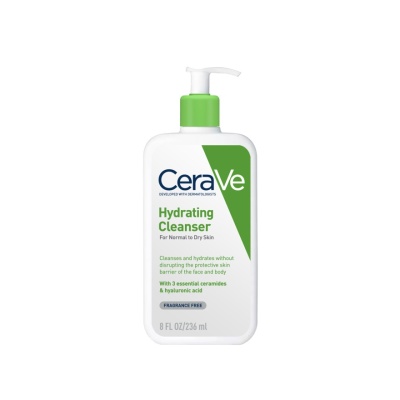
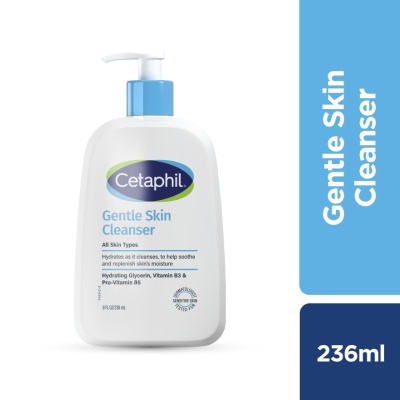
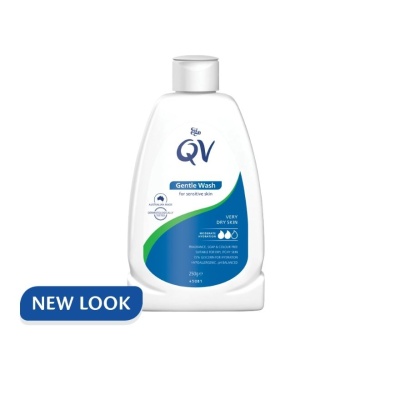
Quick Answer: Fragrance-free (not just “unscented”), a simple surfactant base, and no leave-on isothiazolinones. A handful of widely available options read clean against those criteria on their published formulas: CeraVe Hydrating Cleanser, Cetaphil Gentle Skin Cleanser, QV Gentle Wash, and La Roche-Posay Toleriane Dermo Cleanser.
Here’s the trap that catches people, and the one definition worth memorising: “unscented” is not “fragrance-free.” A product can be labelled unscented and still contain a masking fragrance added specifically to cover a raw-material smell. Fragrance-free means no fragrance was added at all. For eczema-prone skin, that difference is the whole game — so read for the word “fragrance-free,” and confirm it against the INCI list rather than the front-of-pack claim.
Why these four read well: each uses a gentle surfactant system, skips added fragrance on its published formula, and avoids leave-on isothiazolinones. We’re describing why they read clean for eczema — not crowning a single “best.” Your skin gets the deciding vote.
One honest caveat, because it’s the kind of thing that matters: formulas change per market and over time, and a “Baby” or regional version of the same brand sometimes differs from the one we checked. Confirm the ingredient list on the specific pack you’re buying. That’s exactly the check Imbas is built to do in a couple of seconds.
Key takeaway: Buy for “fragrance-free” confirmed on the back label, not “gentle” printed on the front.
The same label-reading approach applies to the rest of your routine — here it is for moisturisers.
Frequently asked questions
Is fragrance-free the same as unscented for eczema? No, and the difference matters. “Fragrance-free” means no fragrance was added. “Unscented” can mean a masking fragrance was added to hide a smell. For eczema-prone skin, look for “fragrance-free” and confirm there’s no Parfum or Fragrance on the INCI list, since the front-of-pack claim isn’t legally defined.
Is methylisothiazolinone (MI) banned? Not outright. In the EU it’s restricted, not banned: prohibited in leave-on products like creams [Reg. (EU) 2016/1198] but permitted within limits in rinse-off products like cleansers [Reg. (EU) 2017/1224]. Because a cleanser is rinsed off in seconds, MI is a much smaller consideration there than in a leave-on product.
Are sulphates (SLS/SLES) bad for eczema? They can be drying for some people, mainly at higher levels in strong foaming washes, but they aren’t a fragrance-style allergen and most gentle cleansers already use milder systems. If your skin feels tight after washing, that’s your signal — switch to a low-foam, fragrance-free cleanser rather than avoiding a single ingredient name.
Can I use a regular gentle cleanser, or do I need a special eczema one? Often a regular gentle cleanser is enough. The label matters more than the marketing category: a plain fragrance-free wash with a simple surfactant base frequently reads better than a pricier product marketed for “eczema” that still contains added fragrance. Read the back before paying for the badge.
Does a longer ingredient list mean a cleanser is worse for eczema? No. List length has little to do with suitability. A long list is usually just a well-engineered formula with stabilisers and skin-conditioning agents. What matters is which ingredients are present — one added fragrance high on a short list is more relevant than fifteen neutral ingredients on a long one.
Should I worry if my cleanser contains parabens? Usually not. It depends which. Methyl- and ethylparaben are considered safe by the EU’s scientific committee (SCCS); propyl- and butylparaben are permitted but restricted; only five specific parabens are banned [Reg. (EU) 358/2014]. “Parabens are banned in Europe” is, as a blanket statement, false.
Cleansers that read cleanly for eczema-prone skin
These aren’t “the safe ones” — most products are fine. They’re the ones whose labels read cleanly for this specific concern, and here’s why we’d reach for each.
Some links are affiliate links — if you buy through them we may earn a small commission, at no extra cost to you. We only suggest products that meet the criteria described in the article, and we say why.
Prices and availability change, and formulas differ by market. General information, not medical advice — for persistent or severe symptoms, see a doctor or dermatologist. Imbas is launching soon — join the waitlist →
Cleansing is half the routine — what you put on after matters at least as much, because it stays on your skin all day. Here’s the same label-reading approach for moisturisers → Moisturisers for eczema-prone skin.
Or — just scan the one you already own
You don’t have to memorise any of this. Point Imbas at the back of any cleanser, tell it your skin is eczema-prone, and it reads the label for you — flagging only what’s worth knowing and telling you, plainly, when the rest is fine. Imbas is launching soon — join the waitlist →
This is general information, not medical advice — if your eczema is severe or persistent, see a doctor or dermatologist. Some links may be affiliate links; we only suggest products that meet the criteria above, and we say why.