
Last updated: 25 July 2026 · ~7 min read · By the Imbas editorial team
TL;DR: Eczema-safe skincare comes down to one habit — reading the back of the label, not the front. For eczema-prone skin, most skincare ingredients are fine and most products are fine. The short list genuinely worth a second look is fragrance (Parfum), a couple of preservatives (mainly MI), and oxidation-prone fragrance components like Linalool and Limonene. Ignore the front-of-bottle words — “gentle,” “hypoallergenic,” and “for sensitive skin” have no legal definition — and read the INCI list on the back, which is standardised and checkable. Sort what you see into three buckets: the rare few worth attention, the large majority that are fine, and the over-blamed. Fear is not a skincare routine.
If you have eczema, or you’re raising a child who does, the skincare aisle can feel like a minefield someone else mapped and refuses to share. Every product says “gentle.” Every influencer says the opposite. Somewhere online, every single ingredient in your bathroom has been called toxic by someone.
Here’s the position of this entire site, stated up front: most skincare ingredients are fine, most products are fine, and fear is not a skincare routine. What actually helps is knowing how to read the one part of the packaging that’s regulated — the ingredient list — and knowing the short list of things that genuinely deserve a second look when your skin barrier is the reactive kind. This is that guide. It links out to the category detail (cleansers, moisturisers, and more), but the method lives here.
Why can’t the front of the bottle help me?
Quick Answer: Because none of those words are regulated. “Gentle,” “hypoallergenic,” “dermatologist tested,” and “for sensitive skin” have no legal definition, so a brand can print them on anything. The back — the INCI list — is the standardised, checkable part.
The front of the bottle is a mood. The back is a document. INCI (International Nomenclature of Cosmetic Ingredients) gives every ingredient one international name, and the first several are listed roughly from most to least abundant. It’s the same list in Kuala Lumpur, Paris, and Seoul, which is exactly what makes it readable and checkable.
Key takeaway: Treat the front as marketing and the back as the answer.
How do I read an eczema-safe skincare label without panicking?
Quick Answer: Sort everything you see into three buckets: (1) the rare few worth your attention for eczema, (2) the overwhelming majority that are fine, and (3) the over-blamed. Most of any label lands in buckets 2 and 3.
The three-bucket model for reading a skincare label with eczema-prone skin. Frequency framing per NACDG patch-test data — i.e. among people already tested for allergies, not the general public. Retrieved July 2026.
| Bucket | What’s in it | How to treat it |
|---|---|---|
| 1. Worth a second look (for eczema) | Fragrance (Parfum); MI / MCI+MI; oxidised Linalool/Limonene | Notice it. Presence isn’t proof — it’s a reason to read on, not to panic |
| 2. The large majority: fine | Water, glycerin, ceramides, most surfactants and emulsifiers, silicones, stabilisers | Relax. A long list is usually a well-engineered formula, not a scary one |
| 3. The over-blamed | Lanolin, propylene glycol, cocamidopropyl betaine, short-chain parabens | Reassure. A scary internet reputation the evidence doesn’t support |
Key takeaway: If a source treats everything as bucket 1, it’s optimising for alarm. A useful flag is a rare one.
Which ingredients actually earn a second look (for eczema)?
Quick Answer: Three, and none because they’re “toxic” — they’re all legal, and most people use them happily. For eczema-prone skin specifically, they show up more in allergy testing: fragrance, methylisothiazolinone (MI), and oxidised Linalool/Limonene.
- Fragrance (Parfum / Fragrance). The single most common thing sensitive skin reacts to. “Fragrance-free” is the default recommendation for eczema-prone skin — and note that “unscented” is not the same claim (a product can be unscented because a masking fragrance was added). Since 2023 the EU also requires far more individual fragrance allergens to be named on labels [Reg. (EU) 2023/1545]; we unpack what that means for “natural” essential oils in the EU fragrance-allergen guide.
- Methylisothiazolinone (MI) and MCI/MI. Preservatives, and among the most common contact allergens found in people tested for skin allergies [NACDG 2019–2022 — among patch-test patients]. The EU treats product type as decisive: banned in leave-on products [Reg. (EU) 2016/1198], permitted but restricted in rinse-off [Reg. (EU) 2017/1224; SCCS/1521/13]. The same ingredient reads differently on a wash than on a cream.
- Linalool and Limonene (when oxidised). Fragrance components that are fine fresh; their oxidised forms — in old or air-exposed products — are common triggers [NACDG — among the more common in patch-test patients]. The takeaway is about product age, not panic.
Key takeaway: Check fragrance first. It does most of the work.
Which “bad” ingredients can I stop worrying about?
Quick Answer: Lanolin, propylene glycol, cocamidopropyl betaine, and the short-chain parabens (methyl-, ethyl-). They dominate scare content but react in only a small minority — and the patch test often over-flags them.
- Lanolin — the classic villain of avoid-lists, yet general-population patch-test positivity sits around 1.6% and its clinical relevance is openly debated [PMC11355248].
- Propylene glycol — reacts in a small minority; the test itself over-flags it [NACDG — around 3.5% among patch-test patients, low clinical relevance].
- Cocamidopropyl betaine — a mild coconut-derived surfactant; where it causes trouble it’s usually a manufacturing impurity, not the ingredient [PMC11187029].
- Short-chain parabens (methyl-, ethyl-) — judged safe at permitted levels by the EU’s scientific committee [SCCS]; the parabens story is really several different stories (below).
We go deeper in the ingredients you can stop worrying about.
Key takeaway: Seeing these on a label is not a reason to put the product back.
Is it true that these ingredients are “banned in Europe”?
Quick Answer: Usually not. The EU runs the world’s most-referenced cosmetic safety system, and most of its actions are restrictions, not bans — an ingredient is permitted up to a limit, or in some product types and not others. “Banned!!” is the signature move of fear-based content.
- Parabens: five specific parabens are banned [Reg. (EU) 358/2014]; propyl- and butylparaben are permitted but restricted; methyl- and ethylparaben are considered safe by the SCCS. “Parabens are banned in Europe” is, as a sentence, false.
- Triclosan: permitted, restricted (max 0.3%) — not “banned.”
- MI: banned in leave-on, restricted in rinse-off — the product type is the story.
When we flag something, we state its status precisely. “Restricted, not banned” isn’t pedantry; it’s the difference between information and alarm.
Key takeaway: Precision is the whole product here. A restriction is not a ban.
Putting it to work: your routine, category by category
The method above is general; the buying decisions are category-specific, so each gets its own guide with products available in Malaysia:
- Cleansers — the label rules for rinse-off products, and gentle cleansers that read clean → gentle cleansers for eczema
- Moisturisers — why leave-on stakes are different, and barrier creams that read clean → moisturisers for eczema
- Everyday products — the triggers outside your skincare shelf (laundry, shampoo, wipes) → everyday products that flare eczema
- Comedogenic charts — why the viral “pore-clogging” ratings mostly aren’t science → comedogenic ratings, explained
Frequently asked questions
What skincare ingredients should I avoid with eczema? A short list is worth checking, not avoiding outright: added fragrance (Parfum), the preservative methylisothiazolinone (MI), and oxidised Linalool/Limonene in old products. Presence on a label isn’t proof a product will bother you — it’s a reason to read more closely. Most ingredients, including long chemical-sounding ones, are fine.
Is fragrance-free the same as unscented? No. Fragrance-free means no fragrance was added. Unscented can mean a masking fragrance was added to cover a raw smell. For eczema-prone skin, look for “fragrance-free” and confirm there’s no Parfum or Fragrance on the INCI list, since neither front-of-pack claim is legally defined.
Are parabens banned in Europe? Only some. Five specific parabens are banned [Reg. (EU) 358/2014]; propyl- and butylparaben are permitted but restricted; methyl- and ethylparaben are considered safe by the EU’s scientific committee. The blanket claim “parabens are banned in Europe” is false, and it’s a reliable sign of fear-based content.
Does a long ingredient list mean a product is bad for eczema? No. List length has little to do with suitability. A long list is usually just a well-engineered formula with stabilisers and conditioning agents. What matters is which ingredients are present — one added fragrance high on a short list matters more than fifteen neutral ingredients on a long one.
Can skincare cure my eczema? No. Skincare can’t cure atopic eczema, and any product promising to is overreaching. What good label-reading does is reduce avoidable flares by helping you skip the few ingredients your skin reacts to. Persistent or severe eczema needs a doctor or dermatologist, who can also patch-test to confirm a specific allergen.
Is “natural” skincare gentler for eczema? Not automatically. Essential oils are fragrance too, and fragrance — natural or synthetic — is the most common thing sensitive skin reacts to. The EU now requires around 80 fragrance allergens, many of them botanical, to be named on labels [Reg. (EU) 2023/1545]. Read a “natural” label the same way you’d read any other.
The simplest eczema-safe routine: cleanse, then moisturise
The whole method above comes down to a couple of gentle, fragrance-free products. Here’s a clean starting point — read your own labels, and patch-test anything new.
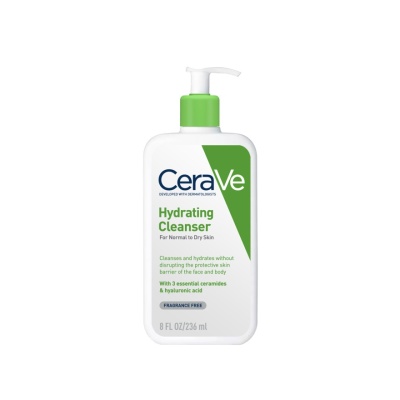
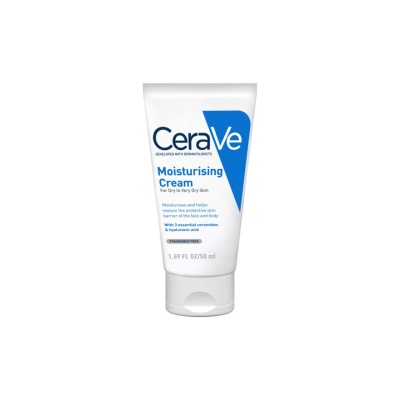
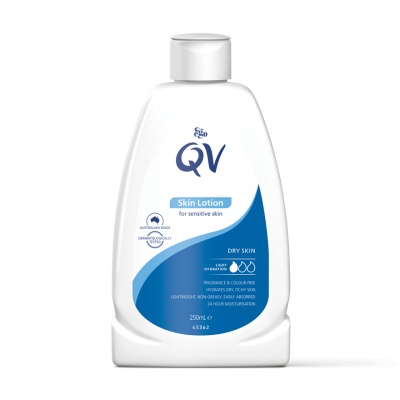
Some links are affiliate links — if you buy through them we may earn a small commission, at no extra cost to you. It’s what lets us do this research and take no money from brands to change a result.
Prices and availability change, and formulas differ by market. General information, not medical advice — for persistent or severe symptoms, see a doctor or dermatologist. Imbas is launching soon — join the waitlist →
This is general information, not medical advice — if your eczema is severe or persistent, see a doctor or dermatologist. Some links on this site may be affiliate links; we only suggest products that meet our published criteria, and we say why.