
Last updated: 25 July 2026 · ~5 min read · By the Imbas editorial team
TL;DR: Comedogenic ratings come from a 1970s rabbit-ear test its own authors said doesn’t predict human skin. The tidy 0–5 “comedogenic” charts everyone shares trace back to a test done on rabbits’ ears in the late 1970s and early 1980s — and the researchers who built it said plainly that it doesn’t reliably predict what happens on human skin. A rabbit’s ear over-reacts, a pure ingredient behaves differently once it’s blended into a product, and comedogenicity depends on your skin, not a single number. Ingredients matter; a context-free chart rating one ingredient guilty for everyone doesn’t. Relax about the chart, not about reading labels.
If you’ve ever googled whether coconut oil or some ingredient “clogs pores,” you’ve met the comedogenic scale: a chart rating ingredients 0 to 5. It gets shared everywhere. It looks scientific. Here’s the uncomfortable backstory.
Where did the comedogenic ratings come from?
Quick Answer: From studies that applied ingredients to the inside of a rabbit’s ear and measured follicle blockage, in the late 1970s and early 1980s. The rabbit ear is far more sensitive than human skin, so it over-reacts — and the method’s own authors warned against reading it as a human result.
Call it the rabbit-ear problem. The researchers behind the test wrote that “substances that are weakly comedogenic in the rabbit are probably safe for human use” [Kligman & Mills, 1982], and catalogued “the many problems in performance of the test method, the absence of correlation with experience in the human” [Frank, 1982]. A rabbit’s ear is a smoke alarm set so sensitive it goes off when you make toast. This isn’t a fringe take; it’s the long-standing view in dermatology.
Key takeaway: The scale was never validated for human skin, by the admission of the people who built it.
Why can’t the chart tell me if an ingredient will break me out?
Quick Answer: Two reasons the scale ignores: a pure ingredient isn’t a finished product, and skin is individual. A single number can’t account for either.
Two things a 0–5 comedogenic rating can’t capture. Per the method’s own authors and later reviews. Retrieved July 2026.
| What the chart does | Why it misleads |
|---|---|
| Rates a pure ingredient 0–5 | An oil rated “4” alone behaves completely differently blended at a small amount into a formula. You buy the formula, not the ingredient. |
| Gives one number for everyone | Comedogenicity, if it happens at all, depends on your skin, your pores, and the whole product — not a universal score. |
Modern reviews continue to flag the ratings as unreliable and prone to false alarms [JAAD Reviews, 2025]. The scale persists because it’s simple and shareable, not because it’s accurate.
Key takeaway: The chart rates the ingredient; your face reacts to the product. Those aren’t the same test.
So should I ignore ingredients entirely?
Quick Answer: No — just the scare-charts. Ingredients do matter. What doesn’t hold up is a context-free 0–5 number treating one ingredient as guilty for everyone. That’s the same mistake the fear-based product-scoring apps make: flag the word, ignore whether it matters for you.
Reading a label well isn’t about memorising a rabbit-ear ranking. It’s about knowing which ingredients are genuinely worth a second look for your concern, and — just as importantly — which ones the internet over-blames. (For Malassezia, or “fungal acne,” the ingredient question is genuinely different and more evidence-based; we’ll cover that properly once our research pass on it is done.) The general method lives in how to read any skincare label.
Key takeaway: Keep reading labels. Just stop outsourcing the decision to a chart built on rabbits.
Frequently asked questions
Are comedogenic ratings scientifically accurate? Not for human skin. The 0–5 scale comes from a rabbit-ear test whose own authors said it doesn’t reliably predict human outcomes [Kligman & Mills, 1982; Frank, 1982], and modern reviews still flag it as unreliable and prone to false alarms [JAAD Reviews, 2025]. Ingredients can matter, but a single context-free number isn’t a trustworthy guide.
Is coconut oil comedogenic? It scores high on the traditional charts, but those charts come from the rabbit-ear test, not human studies, and rate a pure ingredient rather than a finished formula. Whether coconut oil breaks you out depends on your skin and the specific product. Some people do fine with it; others don’t. The chart can’t tell you which you are.
What does “non-comedogenic” on a label actually mean? Less than you’d hope. Like “gentle” or “hypoallergenic,” “non-comedogenic” has no standardised legal definition, so a brand can use it without a defined test behind it. It’s a marketing term, not a guarantee. Read the actual ingredient list and judge the product on your own skin.
Do I need to avoid oils if I’m acne-prone? Not as a blanket rule. Oils vary, formulas vary, and skin varies — the rabbit-ear chart that fuels “avoid all oils” advice isn’t a reliable basis for it. If a specific product consistently breaks you out, avoid that product. Blanket-banning a whole ingredient class on a discredited score usually costs you good products for no reason.
Why do comedogenic charts still get shared if they’re wrong? Because they’re simple, visual, and shareable — a tidy 0–5 number feels more actionable than “it depends.” The same appeal drives fear-based ingredient apps: an easy verdict beats an honest, individual answer. Simplicity spreads; accuracy is quieter.
How we can dig through 1980s rabbit-ear studies for you
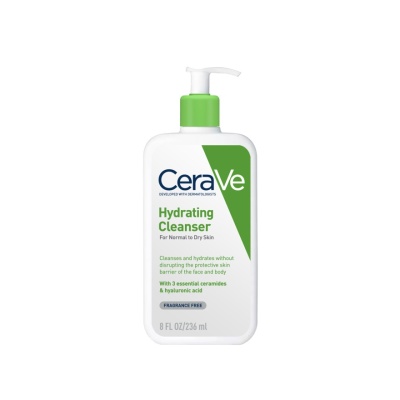
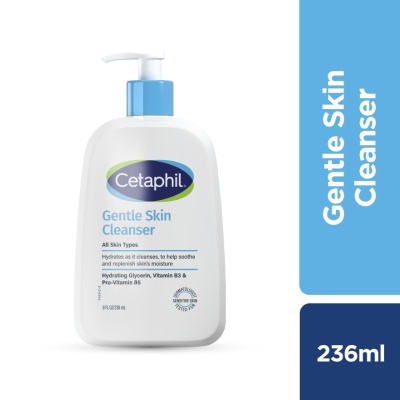
We take no money from brands to change a rating or write a review — what keeps this going is a few affiliate links. If we’ve saved you from a scare-chart today, think of us next time you restock. Here are the gentle, fragrance-free basics we’d point anyone to.
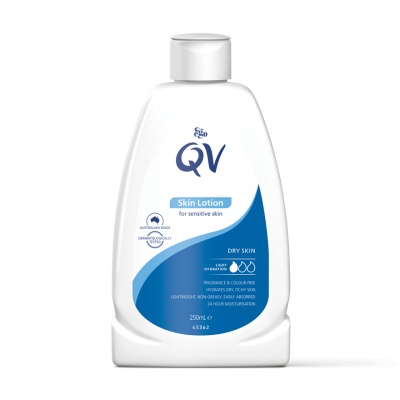
Some links are affiliate links — if you buy through them we may earn a small commission, at no extra cost to you. It’s what lets us do this research and take no money from brands to change a result.
Prices and availability change, and formulas differ by market. General information, not medical advice — for persistent or severe symptoms, see a doctor or dermatologist. Imbas is launching soon — join the waitlist →
General information, not medical advice. Persistent acne is worth a doctor’s or dermatologist’s input.